Why Is Wine 75cl?
Apparently “a nice round litre” was too easy.
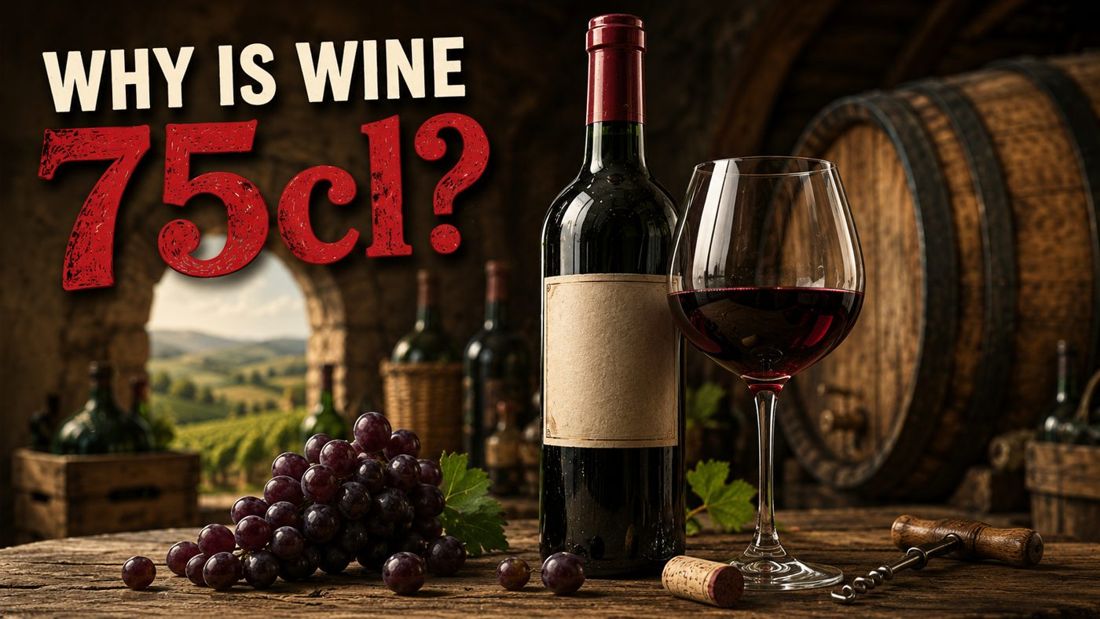
You’ve probably never questioned why a bottle of wine contains exactly 75cl. Why would you? There are more pressing mysteries in life, such as where missing socks go, why one person always orders water for the table and then drinks everyone else’s wine, and why opening a second bottle somehow seems considerably more sensible than opening the first.
But when you think about it, 75cl is a peculiar amount. It isn't a litre, half a litre or even a nice round imperial measurement. It looks suspiciously like somebody chose it after a particularly long lunch.
Sadly, there wasn't an ancient council of French winemakers who gathered around a candlelit table and declared, "Gentlemen, we have calculated the perfect quantity of wine for two people having dinner." The real story involves glassblowers, British drinking habits, barrels, international trade and rather a lot of convenient arithmetic.
Blame the Glassblowers
Before wine bottles were churned out by machines, they had to be made by hand. A glassblower would take extremely hot molten glass on the end of a pipe and blow it into shape, which sounds impressive until you realise that the future of the global wine industry was partly dependent on how much puff somebody had.
The amount of glass that could comfortably be blown produced bottles somewhere around the 70–80cl mark. Bottle sizes weren't completely standardised, but over time something remarkably close to our modern wine bottle became common.
So the 75cl bottle may partly exist because that was roughly the amount of bottle a human being could make without turning purple and falling over.
Then the British Turned Up
Britain has been enthusiastically importing French wine for centuries, but Britain and France had an irritating habit of measuring things differently. The French eventually embraced litres while Britain was still merrily buying things in imperial gallons, presumably because straightforward measurements were considered dangerously continental.
A British imperial gallon is roughly 4.546 litres, while six 75cl bottles contain 4.5 litres. That's conveniently close, which made bottles around this size rather handy when wine was being traded between France and Britain.
There's another satisfying bit of arithmetic hiding in the cellar. A traditional Bordeaux wine barrel holds around 225 litres. Divide that by 75cl and you get exactly 300 bottles, or 25 cases of 12.
Suddenly 75cl stops looking like somebody's drunken guess and starts looking suspiciously efficient.
Eventually Everyone Agreed
Wine bottles still came in various sizes for a long time, which was perfectly manageable until international trade became enormous and governments developed their traditional enthusiasm for forms, regulations and making everybody agree what a bottle actually was.
The United States standardised the 75cl wine bottle in 1979, and European regulations also helped establish it as the familiar standard size. The wine world had finally settled on three quarters of a litre and could concentrate on more important arguments, such as whether screwcaps are acceptable and how much you're allowed to dislike natural wine before somebody calls you old-fashioned.
Conveniently, It's Also About the Right Amount
There is another reason the 75cl bottle has survived so well: it's actually a very useful quantity of wine.
A bottle contains roughly five 15cl glasses, or six smaller 12.5cl servings. That's enough for dinner, enough to share and just small enough that opening another bottle can still be presented as a perfectly reasonable administrative decision.
It's wonderfully adaptable. Four people can have a modest glass each. Two people can share it over dinner. One person can watch a six-part murder documentary and, by episode four, become absolutely convinced the police have overlooked something obvious.
The bottle doesn't judge.
Then We Made Enormous Ones
Having spent centuries arriving at a sensible standard bottle, the wine world naturally decided it needed bottles the size of household appliances.
A Magnum contains 1.5 litres, equivalent to two normal bottles, and from there things become increasingly ridiculous. There are Jeroboams, Methuselahs, Salmanazars and Nebuchadnezzars, names that make ordering wine sound increasingly like you've accidentally wandered into the Old Testament.
A Nebuchadnezzar contains 15 litres, equivalent to 20 standard bottles. At that point you're no longer opening a bottle of wine. You're commissioning it.
So Why 75cl?
There isn't one wonderfully neat explanation. The modern bottle appears to have evolved from a combination of traditional glassblowing, practical trading quantities, convenient barrel mathematics and, eventually, international standardisation.
Which isn't quite as romantic as monks discovering that 75cl represented the sacred quantity of fermented grape juice required for human happiness.
Still, next time somebody opens a bottle you can casually explain that its size probably owes something to the lungs of old glassblowers, British wine imports and the dimensions of a Bordeaux barrel.
They'll either be fascinated or stop inviting you to dinner.
Both outcomes increase your chances of getting the last glass.
Enough reading. Fancy a drink?
Bargain bottles that go rather well with this story.
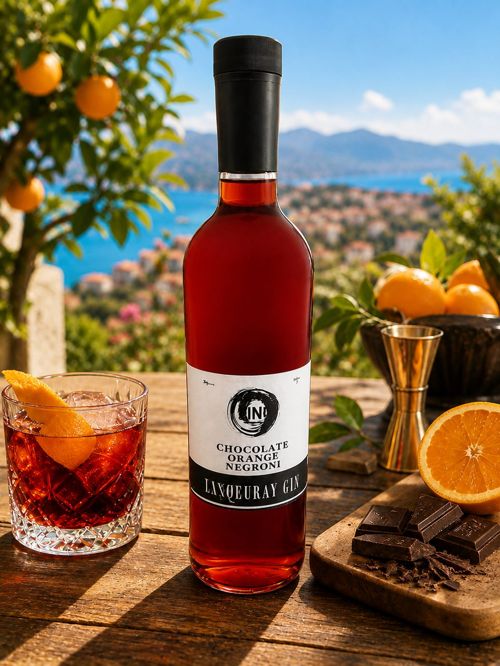
Cocktails Ready to Roll