The World's Strangest Drinking Laws
Apparently simply deciding when and where people can drink wasn’t complicated enough.
# The World’s Strangest Drinking Laws
Alcohol and governments have always had a complicated relationship.
For thousands of years humans have been making beer, fermenting grapes and turning perfectly innocent potatoes into vodka. Governments eventually looked at all this merriment and thought, “This clearly requires paperwork.”
The result is a magnificent global collection of alcohol laws covering when you can drink, where you can drink, what you can drink, who can sell it and, occasionally, who is allowed to carry your drink approximately thirty feet.
Some are sensible. Some are historical leftovers. Some sound as though they were written after an unusually difficult council meeting.
And because the internet is absolutely stuffed with completely invented “weird laws”, we're sticking to ones that actually exist or clearly identifying the dubious ones.
Welcome to the world's strangest legal pub crawl.
England: You Can't Sell Alcohol to Someone Who Is Drunk
Let's begin at home.
Under England and Wales's Licensing Act 2003, knowingly selling alcohol to someone who is drunk is an offence. It's also an offence to knowingly obtain alcohol for a drunk person to consume on licensed premises. ([Legislation.gov.uk][1])
Read that again while looking around virtually any British town centre at 11pm on a Saturday.
The law creates one of the great philosophical questions of British pub culture: at precisely what point does Dave go from “having a lovely evening” to legally being too drunk to buy another pint?
Presumably somewhere between telling everyone he loves them and attempting to explain cryptocurrency to the fruit machine.
Utah: Would Sir Like Some Food With His Alcohol?
Utah has developed some particularly elaborate alcohol rules over the years.
At licensed restaurants, alcohol isn't supposed to be the main event. Customers ordering alcohol must also be dining, and official state guidance says restaurant staff must establish that a customer intends to order food. ([Utah DABS][2])
So you can't necessarily wander into a restaurant and announce:
“Three Margaritas, please.”
“Certainly. And what are you eating?”
“Three Margaritas.”
“No.”
It gets better. Official guidance says servers should verbally establish the customer's intention to dine. Simply staring enthusiastically at the menu isn't necessarily enough. ([Utah DABS][3])
Somewhere in Utah, a nacho has saved a man's evening.
Utah Again: Your Drink May Require an Escort
Utah's 2026 alcohol-law changes introduced another splendidly specific provision.
Under certain circumstances, a customer can carry alcohol from a bar into an adjacent restaurant owned by the same person, but the establishments must be less than 35 feet apart, the customer must be escorted by a bar employee, and they can't cross a public walkway. ([Utah DABS][4])
Imagine explaining this to your pint.
“Don't worry, Trevor from the bar is accompanying us.”
“Why?”
“It's 31 feet to the restaurant.”
“Is it dangerous?”
“Legally, yes.”
The drink has essentially been given close protection.
Utah Has Also Legislated the Sidecar
Utah deserves a third entry because apparently somebody there has spent a considerable amount of time thinking about exactly how much booze should be in your cocktail.
Current state guidance says bartenders are required to limit the amount of hard liquor in mixed drinks to 2.5 ounces in total. ([Utah DABS][5])
This has generated the wonderfully bureaucratic concept of the alcoholic “sidecar”, where permitted additional spirit can be served alongside certain drinks under specific rules.
Ordering a cocktail in most places involves choosing between a Margarita and a Mojito.
In Utah it occasionally feels as though you should bring a solicitor.
Alaska: Being Drunk Can Become the Bar's Problem
Alaska has long had unusually strict rules concerning intoxicated people and licensed premises, including restrictions designed to prevent intoxicated customers being served or hanging around where alcohol is being sold.
Which does at least produce a wonderfully strange concept:
A bar is a building specifically designed to sell people alcohol.
But once alcohol has worked particularly successfully, the relationship becomes considerably less enthusiastic.
“Welcome!”
“Beer?”
“Another?”
“Another?”
“Good Lord, look at the state of you. Out.”
It's basically the hospitality equivalent of building a waterslide and becoming furious when people arrive wet.
Germany: Drinking Beer at 16
Now let's visit a country that approached alcohol regulation from a rather different direction.
Germany allows young people to purchase and consume certain lower-strength alcoholic drinks such as beer and wine from age 16, while spirits generally require you to be 18.
To British ears, allowing a 16-year-old to order a beer can sound startling.
To Germans, Britain's approach of making alcohol forbidden until 18 and then releasing everybody into university freshers' week with absolutely no practical experience probably looks equally peculiar.
Different countries, different philosophies.
Same kebab at the end.
The United States: Welcome to 50 Different Drinking Countries
Talking about “American drinking laws” is dangerous because the United States is essentially 50 different alcohol-law experiments wearing one large coat.
Rules vary enormously by state and sometimes by county or municipality. There are dry counties, state-controlled liquor stores, different Sunday-sales rules, unusual restaurant requirements and enough licensing categories to make opening a pub feel suspiciously like launching a satellite.
Utah's state liquor stores, for example, handle higher-ABV beer, wine and spirits, while ordinary grocery and convenience stores can generally sell beer below 5% ABV. ([Utah DABS][5])
Crossing a state line can therefore turn an entirely normal bottle of booze into something requiring a completely different shopping expedition.
Route 66 would have been a very different song if they'd included alcohol licensing.
The Great British 16-Year-Old Restaurant Loophole
Britain has its own rule that surprises plenty of people.
In England and Wales, 16 and 17-year-olds can drink beer, wine or cider with a meal on licensed premises when accompanied by an adult, although they cannot buy the alcohol themselves.
This produces the peculiar situation where a 17-year-old can legally sit in a restaurant drinking wine with dinner under the right circumstances, but cannot walk into a shop afterwards and buy the same bottle.
The law has essentially decided:
Wine + lasagne + responsible adult = acceptable.
Wine + self-checkout = absolutely not.
The Laws That Aren't Actually Laws
Now we need to enter the murky cellar of internet nonsense.
Search for strange drinking laws and you'll discover hundreds of claims such as “It's illegal to be drunk in a pub in Britain”, “You can't drink beer while standing in X”, or wonderfully specific rules allegedly prohibiting drinking on particular days while wearing particular clothing.
Some have a grain of truth. Some are based on obsolete legislation. Some apply only in very specific circumstances.
Others appear to have been invented by a travel blogger in 2007 and copied by 4,000 websites ever since.
There's even a wider genre of “crazy laws” that collapses spectacularly under investigation. Switzerland, for example, really does have strong welfare requirements preventing social animals such as guinea pigs from simply being kept alone, but plenty of other supposedly Swiss laws circulating online are myths, misunderstandings or local rules presented as national legislation. ([SWI swissinfo.ch][6])
So whenever somebody tells you, “It's illegal to drink Chardonnay while wearing red trousers in Belgium on a Tuesday,” there is an important legal procedure to follow.
Ask them where they read it.
If the answer is Facebook, continue drinking.
Why Are Alcohol Laws So Weird?
Because alcohol is weird.
Governments aren't merely regulating a drink. They're simultaneously dealing with public health, taxation, licensing, public disorder, religion, road safety, children, restaurants, shops, nightlife and several thousand years of cultural baggage.
Every country has approached those problems differently. Then generations of politicians have modified the rules, added exceptions, removed exceptions, created new licences and occasionally left behind regulations that make complete sense legally but sound absolutely bonkers when explained in a pub.
That's how you end up with places where a beer requires food, a cocktail has a legally controlled quantity of spirits, or moving your drink between neighbouring businesses requires an employee escort.
So Where Has the Strangest Drinking Laws?
Utah is making an extremely determined bid for the trophy.
Britain shouldn't laugh too loudly, though. We live in a country where knowingly selling alcohol to someone who is drunk is illegal, despite generations of pub customers apparently regarding “being drunk” as the point at which buying everyone another round becomes an excellent idea. ([Legislation.gov.uk][1])
Perhaps that's the real lesson from drinking laws around the world.
Humans invented alcohol.
Governments invented alcohol regulations.
And somewhere between the two, somebody had to write an official rule explaining whether you're allowed to carry your own glass 35 feet into a restaurant.
Cheers to bureaucracy.
Enough reading. Fancy a drink?
Bargain bottles that go rather well with this story.
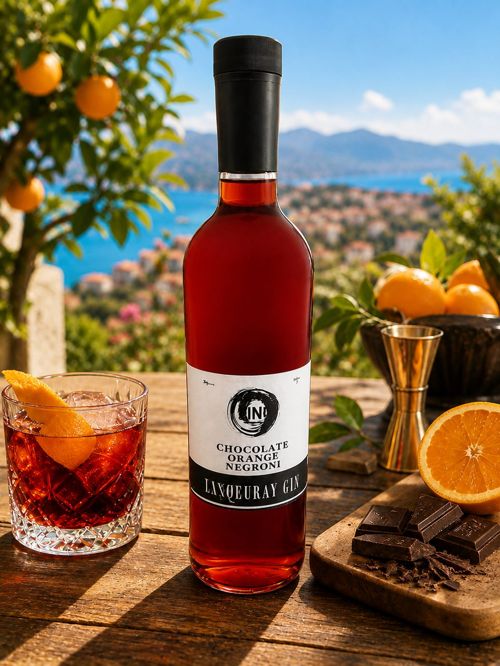
Cocktails Ready to Roll