Who Actually Invented the Cocktail?
Nobody knows. There are bartenders, pharmacists, horses, egg cups and possibly a rooster to blame.
t feels as though this should have a simple answer. Somebody, somewhere, must have been the first person to look at a perfectly serviceable glass of booze and think, “This needs sugar, bitters, possibly some fruit and considerably more washing up.”
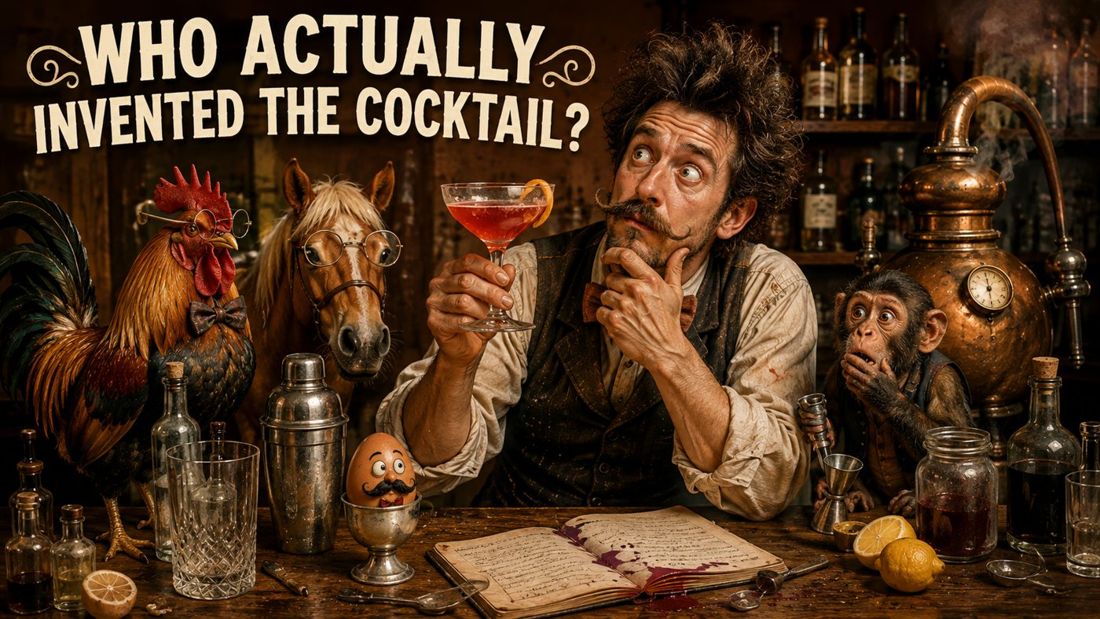
We should have a name, a date and perhaps a small plaque. Instead, the invention of the cocktail is one of drinking history’s great arguments, involving Americans, Frenchmen, pharmacists, bartenders, horses, egg cups and possibly a rooster.
So pour yourself something complicated. We’re going in.
Humans Had Been Mixing Booze for Ages
Before anyone claims to have invented the cocktail, there’s a rather large problem: people had been mixing alcoholic drinks for centuries. Punches, toddies, grogs, flips and all manner of boozy concoctions were knocking around long before anyone ordered an Espresso Martini and then spent five minutes photographing it.
So nobody really invented the idea of mixing alcohol with other things. That would be a bit like claiming you invented sandwiches because you put ham between two particularly interesting pieces of bread.
The real mystery is when one particular type of mixed drink became known as a cocktail.
America Enters the Bar
One of the earliest known printed references to “cocktail” as a drink appeared in an American publication in 1803. Then, in 1806, a newspaper called The Balance and Columbian Repository did something extremely helpful and actually explained what one was.
A cocktail was described as a stimulating drink made from spirits, sugar, water and bitters. That's basically an Old Fashioned standing around waiting for somebody to give it a nicer glass.
More importantly, cocktails were clearly established enough by 1806 that somebody thought newspaper readers needed to know what they were. Unfortunately, the definition doesn't tell us who invented them. Whoever did had already wandered off into history without leaving a forwarding address.
Was It a Pharmacist in New Orleans?
Now we arrive at one of the best stories.
Antoine Amédée Peychaud was a New Orleans apothecary associated with Peychaud's Bitters. According to a famous tale, Peychaud served a mixture involving cognac, sugar and his bitters in a little French egg cup called a coquetier.
Coquetier becomes cocktail. Mystery solved. Everybody can go home.
Except there's a problem.
It's a magnificent origin story, but the word “cocktail” was already appearing in American print before Peychaud could plausibly have invented it. New Orleans can keep an enormous amount of cocktail glory, but it probably can't claim that the entire thing began because somebody couldn't pronounce the French word for an egg cup.
Shame, really. That would have been excellent.
What About the Sazerac?
Peychaud does lead us towards the Sazerac, one of America's great historic cocktails. Early versions were associated with cognac, Peychaud's Bitters and sugar, with the drink eventually evolving into the rye-whiskey-and-absinthe-rinsed creation we recognise today.
New Orleans therefore has a very legitimate claim to some extremely important cocktail history. But inventing an excellent cocktail isn't the same as inventing cocktails.
Otherwise the person who invented Hawaiian pizza also invented pizza, and Italy would probably like a word.
Enter Professor Jerry Thomas
If cocktails had a Victorian superhero, it would probably be Jerry Thomas.
Thomas was a flamboyant 19th-century American bartender known as “Professor” Jerry Thomas. In 1862 he published How to Mix Drinks, or The Bon-Vivant's Companion, an enormously important early American collection of mixed-drink recipes.
He didn't invent the cocktail. People had already been drinking them for decades. What Thomas did was arguably just as useful: he helped turn bartending knowledge into something that could be written down, reproduced and subsequently argued about for the next 160 years.
His books contained punches, flips, sours, fizzes and cocktails, helping to document a drinking culture that had previously relied heavily on individual bartenders and local traditions.
Essentially, Jerry Thomas didn't invent the cocktail.
He gave it an instruction manual.
So Why Is It Called a Cocktail?
Excellent question. Nobody knows for certain, which is where drinking historians start staring sadly into the middle distance.
One theory involves horses. A horse with a docked or clipped tail could be described using “cock-tail”, and the expression became associated with horses that weren't thoroughbreds. From there, perhaps the idea of something being “mixed” eventually transferred to mixed drinks.
There are other explanations involving rooster tails, barrel leftovers, ginger and various linguistic gymnastics. Some are wonderfully elaborate, which unfortunately isn't the same thing as being true.
The precise origin of the drinking term remains uncertain. Humanity successfully invented the cocktail and then immediately lost the receipt.
So Who Actually Invented the Cocktail?
Probably not one person.
Cocktails appear to have evolved from much older traditions of mixing alcoholic drinks. By the early 1800s, Americans were using “cocktail” to describe a particular style of drink involving spirits, sugar, water and bitters. Over the following decades bartenders experimented, recipes multiplied and people such as Jerry Thomas helped turn cocktail making into a recognisable profession.
Who mixed the first one and thought it deserved a new name? We don't know. Who first decided to call it a cocktail? We don't know. Why did they choose that particular word? We're not entirely sure about that either.
For a subject involving quite a lot of written history, we've achieved an impressive amount of not knowing things.
What we can say is that America played a central role in the development of the cocktail as we recognise it, New Orleans contributed some legendary drinks, and bartenders such as Jerry Thomas helped transform scattered recipes and traditions into a documented cocktail culture.
So next time somebody makes you a cocktail, raise your glass to its mysterious inventor. We don't know their name, where they lived or even exactly what they made.
But somewhere in history, somebody looked at a glass of spirits and decided it needed more stuff in it.
Bars have been charging us £14 for the consequences ever since.
Enough reading. Fancy a drink?
Bargain bottles that go rather well with this story.
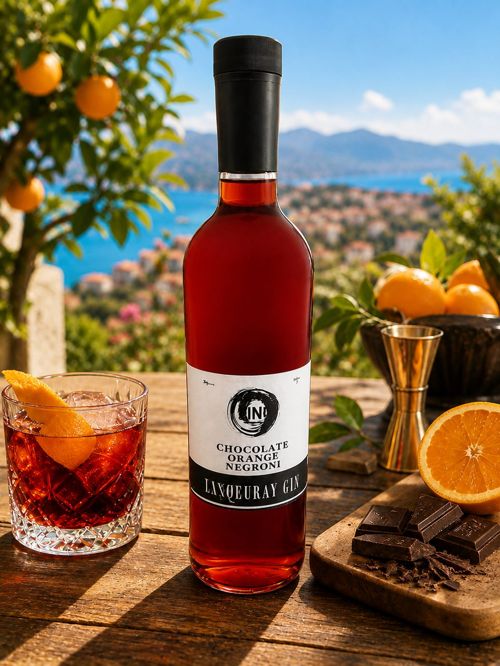
Cocktails Ready to Roll