Why Do We Say Cheers?
From ancient drinking rituals to modern pubs, how one little word became Britain’s answer to almost everything.
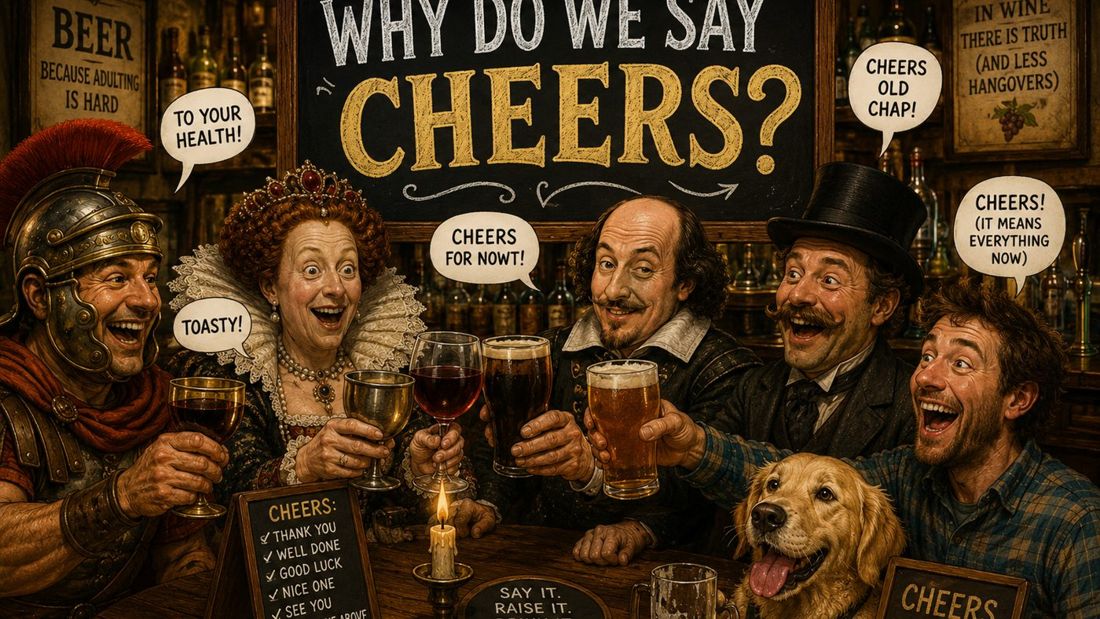
You’re in a pub. Someone arrives with the drinks. Everybody raises a glass and, almost automatically, says “Cheers!”
Nobody has issued instructions. There isn't a bloke from the council checking compliance. Yet somehow an entire table of adults knows that before consuming the liquid they've just paid £7.20 for, they should briefly hold it in the air and say the same word.
We also say “cheers” when somebody holds a door open, passes the salt, sends us an email or tells us our train has been cancelled but we're welcome to try again tomorrow.
So how did one little word end up meaning everything from “here's to your health” to “thanks for moving your shopping trolley”?
Cheers Didn't Start in the Pub
The word “cheer” is much older than the drinking expression. It came into English through Old French and originally referred to the face or expression. Over time, its meaning wandered from your actual face towards your mood and state of mind.
Hence expressions such as “be of good cheer”.
In other words, cheer gradually became associated with happiness, encouragement and generally not looking as though somebody had just told you the bar was closing early.
By the 18th century, “cheers” was being used as a shout of encouragement or approval. Eventually it became firmly attached to drinking and toasting.
And Britain gained a word that could simultaneously mean happiness, encouragement, gratitude and “stop talking, I'd like to drink this now.”
Before Cheers, We Had Toast
The drinking toast itself is considerably older than the modern expression “cheers”. Humans have been raising drinking vessels in honour of gods, rulers, victories, friendships, marriages and people they quite fancy for thousands of years.
The ancient Greeks and Romans had elaborate drinking rituals. Medieval Europeans drank to people's health. By later centuries, proposing a toast had become an established social ritual.
But why “toast”?
This is where things become delightfully odd.
The word is linked to the practice of putting actual pieces of toasted or spiced bread into wine or other drinks. Eventually, calling someone “the toast” of a gathering meant that person was supposedly adding flavour or distinction to proceedings, rather like the toast added flavour to the drink.
So when someone says, “I'd like to propose a toast,” they're using a word with historical connections to somebody dropping cooked bread into booze.
Civilisation has taken some strange turns.
Why Do We Raise the Glass?
Raising the glass is part of the much older tradition of drinking to someone's health, success or good fortune.
It also gives everyone a useful visual signal that Something Ceremonial Is Happening.
You can't simply start a wedding toast by quietly sipping your Chardonnay in the corner. You need elevation. Eye contact. Perhaps some glass clinking. Ideally an elderly relative becoming emotional before you've reached the second sentence.
The raised glass turns drinking into a shared moment rather than several people independently putting liquid into their mouths.
Which, when stripped of all romance, is essentially what a toast is.
What Are We Actually Wishing People?
When you say “cheers” before drinking, you're basically expressing goodwill.
Other languages make this more obvious.
The French say “Santé!”, meaning health. Italians say “Salute!”, also health. Spanish speakers commonly use “Salud!”, which, once again, means health.
The Germans have “Prost!”, derived from a Latin expression meaning roughly “may it benefit you”.
The British went with “Cheers!”
Which feels appropriately less specific.
Health? Happiness? Friendship? Good fortune? Another round?
Yes.
All of it.
Cheers.
And Then Britain Used It for Absolutely Everything
This is where “cheers” becomes gloriously British.
At some point we decided that a perfectly good drinking expression shouldn't be wasting its life exclusively in pubs.
Someone hands you your change?
“Cheers.”
Someone lets you merge into traffic?
“Cheers.”
Someone emails you a spreadsheet?
“Cheers.”
Someone tells you where the toilets are?
“Cheers.”
Someone nearly runs you over but stops approximately four inches before converting you into a bonnet ornament?
You might still mouth “cheers” through the windscreen.
It has become one of Britain's great linguistic multitools. Depending on tone, “cheers” can mean thank you, goodbye, excellent, understood, appreciated, good luck, here's to us, or “I acknowledge what you have just done and would now like this interaction to end.”
Is Cheers the Same as Clinking Glasses?
Not quite.
Saying “cheers”, proposing a toast and clinking glasses are related traditions, but they don't appear to have sprung from one single event.
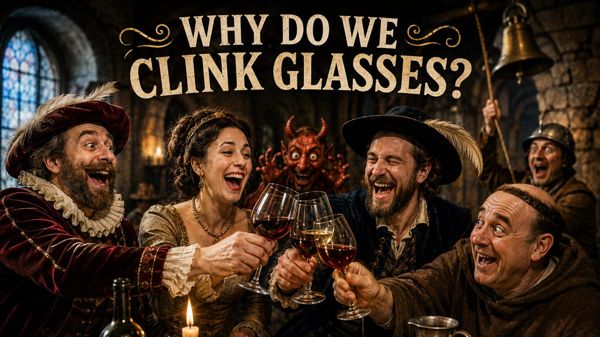
Humans had drinking rituals long before anyone wandered into a medieval tavern and invented the modern pub “cheers”. Over centuries, different customs became bundled together: raise the drink, wish everyone well, clink the glasses, make eye contact and finally drink.
We've basically turned having a mouthful of wine into a small opening ceremony.
And heaven help the person who drinks before everyone else.
What About the Poison Story?
You've probably heard that people clinked glasses so violently that wine splashed between them, proving nobody had poisoned anybody else's drink.
It's a fantastic story.
Imagine a medieval banquet:
“Your wine, sire.”
“Thank you.”
“Before I drink it, would you mind smashing your goblet into mine hard enough to transfer some of the contents?”
“Certainly.”
“Excellent. Cheers.”
Unfortunately, there's little solid evidence that this is actually where the modern custom of clinking glasses originated.
The same applies to some of the more colourful explanations involving evil spirits and the idea that the ringing sound of glasses acted like tiny church bells.
They're cracking stories. They're just better treated as folklore than historical fact.
So Why Do We Say Cheers?
Because language does what people do after a few drinks: it wanders.
A word that once had connections with someone's face gradually came to mean mood, happiness and encouragement. It became a celebratory cry, found a comfortable home alongside the ancient tradition of drinking to someone's health, and eventually became the word millions of us instinctively say when glasses go up.
Then Britain discovered it could also be used instead of “thank you” and promptly deployed it everywhere.
So next time somebody raises a glass and says “Cheers!”, remember you're participating in centuries of changing language, ancient drinking rituals and social tradition.
Or don't.
There is wine getting warm.
Cheers.
Enough reading. Fancy a drink?
Bargain bottles that go rather well with this story.
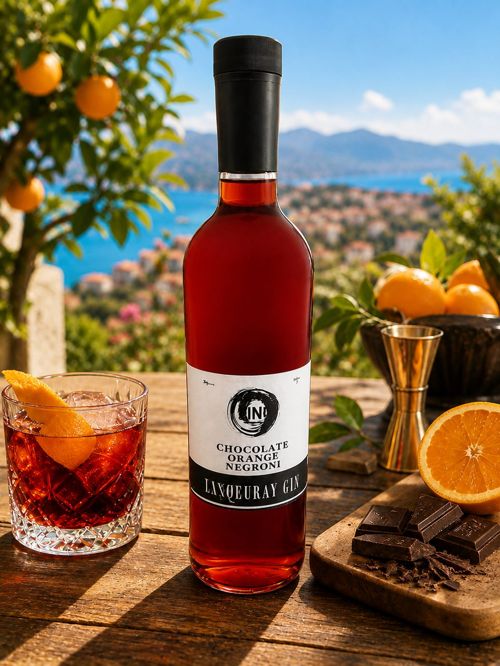
Cocktails Ready to Roll